

 |
 |
 |
 |
 |
 |
 |
 |
 |
 |
 |
 |
In Great Britain the time is #LSTimeFormat(Now(),"HH:mm")#
on
#DayofWeekAsString(DayOfWeek(Now()))# #LSDateFormat(Now(),"dd mmm
yyyy")#
Look
up and book your stay online using our online search which opens
in a new window.
Langley Castle Hotel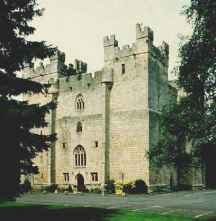
Built in 1350, during the reign of Edward III, the castle has retained its architectural integrity and is regarded as one of the few medieval fortified Castle Hotels in England.
Over the past 600 years, the Castle has been owned, together with its estate, by Lords and Ladies whose names were frequently associated with the turbulent history of the Kingdom. During the 17th century the Langley estates became the property of the Earls of Derwentwater; Viscounts Langley. James , the third Earl and Charles his brother, took part in the Jacobite risings of 1715. They were subsequently executed at the Tower of London. A cross stands by the road from the Castle to Haydon Bridge commemorating their loyalty to the King of Scotland (their Lawful Sovereign), which reads:
In memory of James and Charles
Viscounts Langley
Beheaded on Tower Hill
24th Feb 1716 and 8th Dec 1746
For Loyalty to
their Lawful Sovereign
The property was confiscated by the Crown and its administration passed to the Royal Naval Hospital at Greenwich in London. Signs of the Admiralty's influence can still be seen in the area. For example the anchor motif on the front of a house at Langley and the naming of a pub in Haydon Bridge as The Anchor.
In 1882 a local historian, Cadwallader Bates, purchased the property. The restoration of the Castle to its original 14th Century structure became a life's work not only for Cadwallader, but also for his wife Josephine, who continued his work after Cadwalladers death in 1902. Josephine rebuilt the original chapel on the castle roof in memory of her husband and worked tirelessly until her own death in 1933. She was buried alongside her husband in the castle grounds.
Langley Castle's history as an hotel and restaurant begins a new chapter in its fascinating history.
South West Garderobe Tower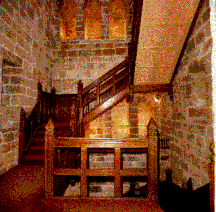
This tower is a most interesting facet of the Castle, as it was totally dedicated to Garderobes (medieval latrines) on an almost monumental scale. This lavish provision was a rare facility in castles and houses of the period. There are twelve Garderobes, four on each floor, each having a pointed arch to the recess, in which are stone corbels to carry the seats. The shafts discharged into a pit below, through which a stream of water could be diverted to flush it clean.
The number of Garderobes suggests that Langley Castle was intended from its inception to be well garrisoned, being more than just a family residence. These Garderobes are perhaps the finest remaining examples of this type and style of architecture in Europe.
Latest in the Forums
There are 0 active discussions.
There are
There are 0 active polls.
There are

© and ™ 1997-
Company Information